
🧘♀️ Time to Recharge
Make time to support your mental health and well-being, even when your schedule is busy. Explore these books for practical ideas on managing stress, building resilience, navigating challenges, strengthening self-confidence and practicing self-care.
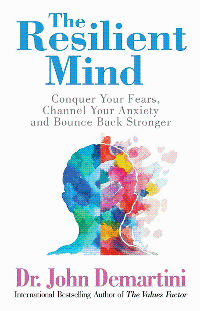
The Resilient Mind
A practical manual for understanding why you live the way you do, and how to transform your life into your highest vision. The Resilient Mind shows you how to face challenges and make opportunities out of them as well as how to deal with distractions and difficulties.
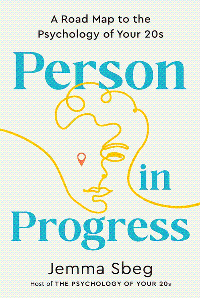
Person in Progress
A roadmap to navigating the personal and professional transitions of your twenties. Whether you’re wrestling with imposter syndrome, doing your best not to self-sabotage, attempting to settle your anxious mind, or trying to keep your head above water in the murkiness of the dating pool, Jemma Sbeg will help you deal with the most chaotic moments of this decade by understanding the psychology behind them.

Crazy Busy
Learn how to cope with stress and create more peace and calm in your life. The author draws on the latest scientific knowledge, the methods used by experts and the stories told by those who have learned the hard way what stress can do to both body and mind. All to provide you with the answer to the question: how can you free yourself from a life of stress?
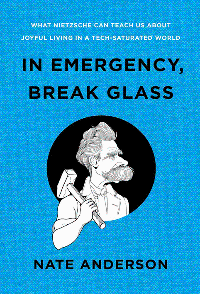
In Emergency, Break Glass
Written long before the advent of smartphones, Nietzsche’s aphoristic philosophy advocated a fierce mastery of attention, a strict information diet, and a powerful connection to the natural world. Drawing on Nietzsche’s work, technology journalist Nate Anderson advocates for a life of goal-oriented, creative exertion as more meaningful than the “frictionless” leisure often promised by our devices.
Inner Workout
Caring for yourself is essential. This is where Inner Workout comes in: First by redefining what self-care truly is and then by diving deep into areas where you might need some help. Addressing issues like body positivity, burnout, brain fog, self-confidence, and more, this guide offers a variety of practices, prompts, and actionable advice to strengthen your connection to each aspect of yourself.
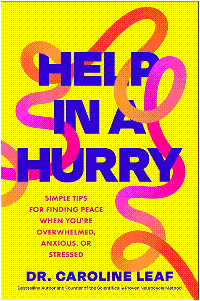
Help in a Hurry
it's perfectly normal to feel lost, anxious, or overwhelmed at times. But none of us want to stay that way for long. With actionable, evidence-based strategies to handle your most common challenges in life, this practical guide offers the tools you need to prevent a descent into chaos and instead to find peace and strength amid the turmoil of daily life.
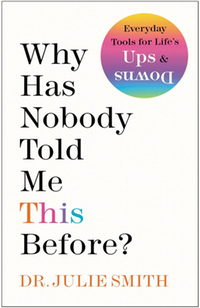
Why Has Nobody Told Me This Before?
Filled with secrets from a therapist’s toolkit, this book teaches you how to fortify and maintain your mental health, even in the most trying of times. Expert advice and powerful coping techniques will help you stay resilient, whether you want to manage anxiety, deal with criticism, cope with depression, build self-confidence, find motivation, or learn to forgive yourself.
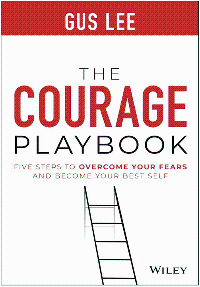
The Courage Playbook
A practical guide to gaining your courage to live rightly, treat others without bias and lead inspirationally. Readers will acquire Five Steps to Courage, 3 NO’s, 3 GO’s and Courageous Communication Plays. These lend deeper meaning to life, strengthen our character, improve relationships and allow us to help others for the common good.
Updates
🧠 World Mental Health Day
October 10 is World Mental Health Day, an annual observance that raises awareness of mental health and available supports. Throughout October, visit the purple wall at the front of the library to see a display created by the OWLs (Outreach Wellness Leaders).
Also, check out our wellness bookshelf! It’s located just around the corner from the library information desk and has a great selection of self-care titles.
🌈 Rainbow reads
October 12-16 is Pride Week. Look out for a selection of books and book recommendations from Pride at SAIT, in the glass cases at the front of the library.
🌎 Digital resource for sustainability month: GreenFILE
Explore sustainability topics with GreenFILE database, featuring scholarly, government and general-interest resources. Find well-researched on human impacts on the environment, including content on global warming, green building, pollution, sustainable agriculture, renewable energy, recycling and more.
💀 Halloween


Get into the halloween spirit with some gory graphic novels from our fiction section, stream a scary movie for free through our library subscription to Criterion on Demand, or pop in to the library around the end of October for a photo with our library skeleton in residence, Mr Bones.
📚 How we can help: Assignments
Stuck on research or citation for your assignment? We can help with:
- Getting started on research
- Developing and refining your search terms
- Choosing an appropriate database to search
- Finding the most relevant, current research
- Finding materials in and beyond the library
- Citing sources
Ask at our information desk: Visit us in-person or chat with us online for help with finding resources, research or citation.
Meet your librarian: Each school at SAIT has a dedicated librarian with expertise in your area of study. Schedule a meeting with your librarian for an in-depth research or citation query.
Explore our online resources:
- Citation guides - help for citing books, articles, images, videos, course materials and AI.
- A-Z list of databases - a great start for finding articles related to your field of study.
- Subject guides - with research tips and resources for your program or course.
Whatever you're working on this October, we hope you'll stop by, explore and let us know how we can help.

Oki, Âba wathtech, Danit'ada, Tawnshi, Hello.
SAIT is located on the traditional territories of the Niitsitapi (Blackfoot) and the people of Treaty 7 which includes the Siksika, the Piikani, the Kainai, the Tsuut’ina and the Îyârhe Nakoda of Bearspaw, Chiniki and Goodstoney.
We are situated in an area the Blackfoot tribes traditionally called Moh’kinsstis, where the Bow River meets the Elbow River. We now call it the city of Calgary, which is also home to the Métis Nation of Alberta.